If you own a home or building in Ontario, you already know that our climate is not gentle on energy bills. Long winters, humidity swings, and hot summers put constant pressure on your heating and cooling systems. Good insulation is no longer a “nice to have.” It is one of the smartest investments you can make in comfort, durability, and long-term savings.
In most Canadian homes, heating alone can account for around 60 percent of total energy use, which means every gap in your building envelope shows up on your utility bill. When insulation and air sealing are done poorly, warm air leaks out in winter, cool air escapes in summer, and your furnace or air conditioner has to work harder to keep up.
Why modern insulation is about both R value and air sealing
Traditional insulation materials like fiberglass batts can provide decent R value when installed carefully, but they do not always stop air movement. Air leaks through cracks, joints, and penetrations. That is where spray foam and exterior foam systems stand out.
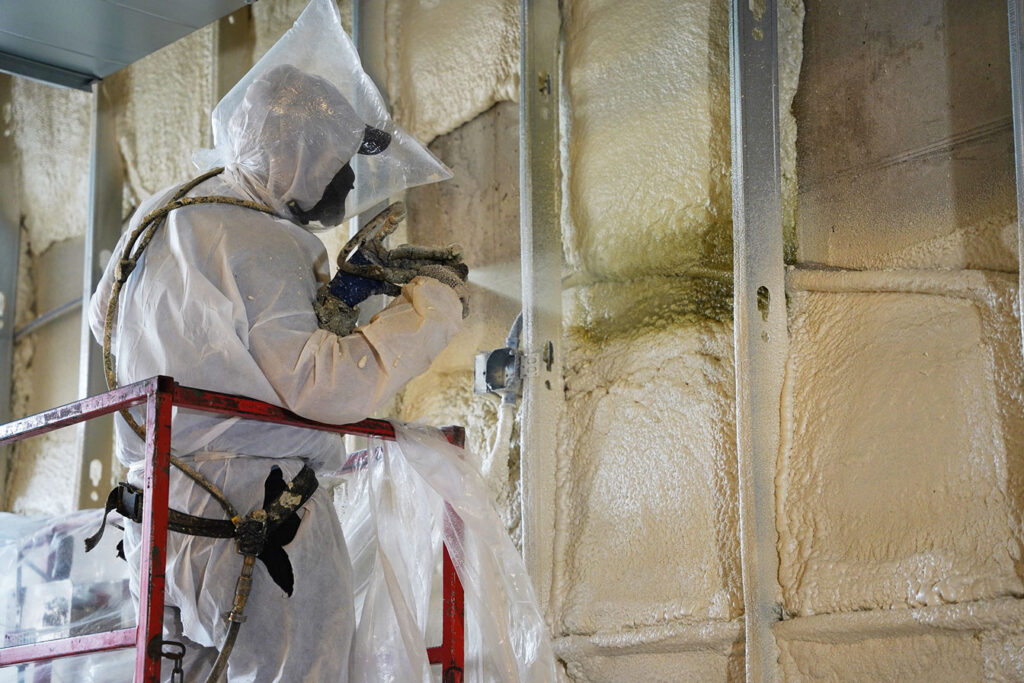
Closed cell spray polyurethane foam has a high R value per inch and also acts as an air barrier when applied correctly. It adheres to framing, sheathing, and irregular surfaces and creates a continuous seal that greatly reduces drafts and heat loss. This combination of thermal resistance and air sealing is a big reason many energies efficient builders consider spray foam one of the most powerful tools in the insulation toolbox.
The power of a high performing building envelope
Your building envelope includes the walls, roof, windows, doors, and foundation that separate indoors from outdoor conditions. The tighter and better insulated that envelope is, the less energy you waste and the more stable your indoor temperature feels.
Spray foam is especially effective in areas where traditional insulation struggles, such as:
- Rim joists and band joists
- Complex rooflines and vaulted ceilings
- Around penetrations for plumbing, wiring, and vents
- Behind knee walls and in small cavities
By sealing these weak spots, spray foam helps keep conditioned air inside, improves comfort on every floor, and supports a more efficient HVAC system.
Exterior foam and continuous insulation: stopping thermal bridges
Even when wall cavities are filled with insulation, heat can still escape through studs and structural members. This is known as thermal bridging. Building codes increasingly recognize that thermal bridging significantly weakens real world insulation performance, which is why they promote continuous insulation systems.
Exterior foam insulation, often installed as rigid foam boards or integrated exterior foam systems, creates an uninterrupted insulation layer on the outside of the structure. This helps:
- Reduce thermal bridging through studs and framing
- Improve overall wall R value
- Protect the structure from temperature swings
- Support moisture management and durability
In Ontario, many assemblies now include exterior continuous insulation to meet higher efficiency standards, with R 5 to R 10 of rigid foam commonly used on exterior walls.
Attics and roofs: where modern insulation makes a huge difference
Attics are another critical area for energy savings. Research indicates that roughly 20 to 30 percent of the energy used in a home can be lost through the roof if insulation is inadequate. In Ontario, recommended attic R values are often in the R 50 to R 60 range, depending on location and home type.
Spray foam can be applied to the underside of roof decks to create an unvented conditioned attic, while blown in cellulose or fiberglass can be used as a cost-effective top up in traditional attics. In many projects, a hybrid approach is used, with spray foam for air sealing and an additional layer of loose fill insulation to reach the target R value.
Why a full-service contractor matter
Modern insulation is not just about one product. It is about designing a system that suits your building, your budget, and your long-term goals. That is where a full-service contractor like Desa Foam Insulation stands out.
Because Desa Foam provides spray foam, batt insulation, attic insulation upgrades, exterior foam, fireproofing, steel framing, drywall, and foam slab jacking, the team can look at the entire structure instead of pushing a single solution. That means smarter recommendations, better sequencing with other trades, and a smoother project from start to finish.
Practical benefits you will notice
When modern insulation and air sealing are done right, you will see and feel:
- Lower heating and cooling bills
- Fewer drafts and cold floors
- More even temperatures between rooms and levels
- Quieter interiors
- Less condensation and moisture risk in building assemblies
- Better comfort for tenants, customers, or family members
If you are planning a renovation, building a custom home, or upgrading a commercial space, modern insulation is one of the best investments you can make in long term performance.
Call Desa Foam Insulation today to discuss spray foam and exterior foam options for your next project and get a tailored quote for your home or building in Ontario.