When people hear “spray foam,” they often think only of wall or attic insulation. In reality, foam technology has grown into a powerful tool for structural repairs too. Two of the most impressive applications are foam slab jacking and injectable sealing foam. Together, they can fix sunken concrete, stabilize soil, seal hidden voids, and block air and moisture paths that damage buildings over time.
For property owners in Ontario who want solutions that are fast, clean, and long lasting, these foam-based methods are a game changer.
What is foam slab jacking?
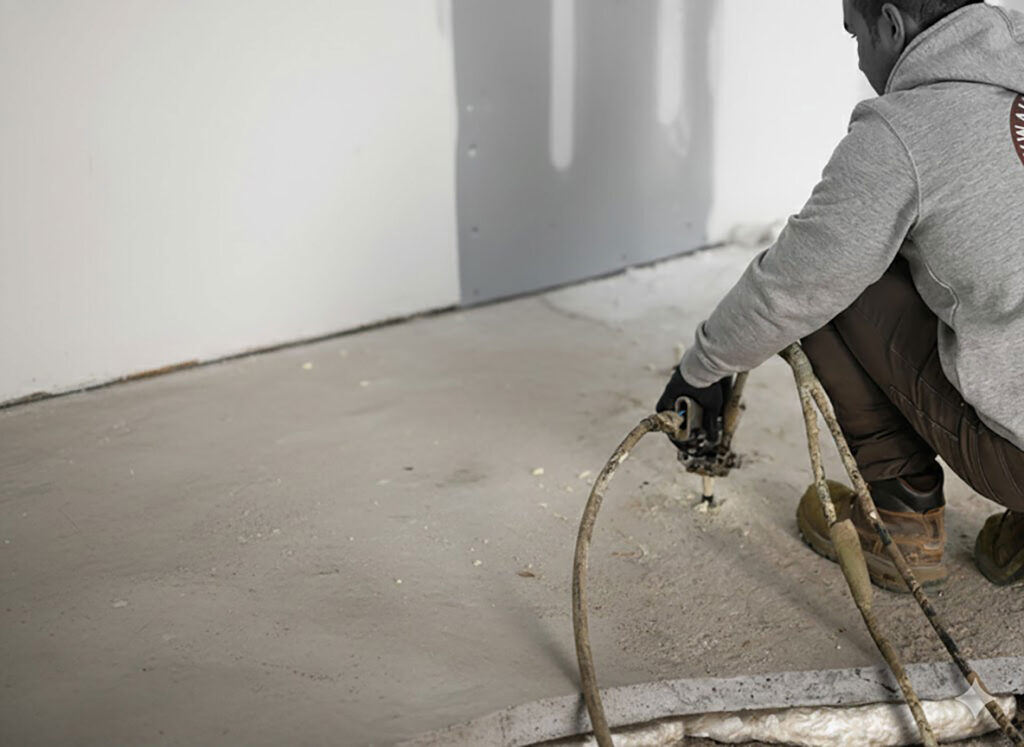
Foam slab jacking, also called polyurethane concrete lifting, is a technique that raises settled concrete slabs by injecting expanding foam beneath them. Instead of breaking out the concrete and replacing it, technicians drill small holes, insert injection ports, and pump high density polyurethane foam under the slab. As the foam expands, it lifts the concrete back toward its original position and fills any voids in the soil.
Typical applications include:
- Sunken driveways and garage slabs
- Uneven sidewalks and walkways
- Tilted patios and pool decks
- Interior warehouse or factory slabs
- Slabs settled due to erosion or poor soil compaction
Why foam is often better than traditional mudjacking or replacement
Traditional mudjacking uses heavy slurry of cement and soil. Foam slab jacking uses lightweight polyurethane. That difference leads to several advantages:
- The injection holes are much smaller, which looks better and preserves more of the concrete.
- Foam adds very little weight to already stressed soil.
- The material expands to fully fill voids under the slab.
- Foam is moisture resistant and will not wash out or shrink over time.
- Slabs can often be put back into service within hours instead of waiting days for new concrete to cure.
In many projects, lifting with foam can cost 30 to 50 percent less than full slab replacement, while avoiding the noise, dust, and disruption of demolition. The environmental impact is also lower because existing concrete is reused instead of sent to landfill.
Where DESA Foam Insulation fits in
DESA Foam Insulation uses foam slab jacking to help homeowners, commercial property managers, and industrial clients restore safe, level surfaces without shutting down operations for days. Because the same team also specializes in insulation, fireproofing, and sealing, they can identify when settlement issues are linked with moisture problems, poor drainage, or air leakage paths and address those together.
That integrated view often saves clients from repeated repairs, since the underlying cause gets treated, not just the symptom.
Injectable sealing foam: small holes, big results
While slab jacking focuses on lifting concrete, injectable sealing foams focus on sealing gaps, voids, and hidden paths that leak air or water. These high-quality foams are injected into targeted areas using specialized equipment. They expand to fill cavities and bond to surrounding materials, creating a durable, high resistance seal.
Typical uses include:
- Sealing rim joists and band joists
- Filling awkward cavities around pipes and penetrations
- Closing voids in wall assemblies and behind cladding
- Sealing joints and cracks where bulk water or air is moving
Because the foam is fluid when applied, it can reach places traditional materials cannot. Once cured, it provides both air sealing and support, which can help reduce drafts, moisture migration, and even pest intrusion.
How these foam technologies protect your building envelope
Your building envelope works as a system. Gaps at slab edges, sunken exterior pads, and hidden voids can all undermine its performance. For example:
- A sunken slab at an entrance can direct water toward the foundation instead of away from it.
- Gaps at rim joists allow cold air to pour into basements and crawlspaces, chilling floors and increasing heating loads.
- Voids in wall assemblies can collect moisture and create cold spots that lead to condensation.
By combining foam slab jacking with injectable sealing foam, DESA Foam can lift critical slabs back into proper alignment and then seal the junctions and gaps that were created or exposed by movement. This helps:
- Improve drainage away from the building
- Reduce air and moisture infiltration at the foundation
- Stabilize soil and reduce further settlement risk
- Support more consistent temperatures and better comfort inside
A cleaner, faster experience for property owners
One of the biggest advantages of these foam-based solutions is how little disruption they cause. Instead of jackhammers, heavy equipment, and days of curing time, most foam slab jacking and sealing projects involve:
- Small equipment and tidy work areas
- Minimal dust and debris
- Rapid curing, often within minutes
- Slabs and spaces that can be used again the same day
For commercial and industrial clients, that often means no lost business days. For homeowners, it means far less stress and mess on site.
When to call DESA Foam Insulation
You should consider a foam-based repair if you notice:
- Sunken steps, driveways, or walkways
- Water pooling near the foundation
- New cracks or gaps at the base of walls
- Cold floors near slab edges
- Persistent drafts in basements or lower levels
A site visit allows the DESA Foam team to evaluate whether foam slab jacking, injectable foam sealing, or a combination with insulation upgrades would be the best solution.
If you want structural repairs that are smart, efficient, and aligned with modern building science, foam technologies deserve a serious look.
Contact DESA Foam Insulation to schedule an assessment and discover how foam slab jacking and injectable sealing foam can restore and protect your property with minimal disruption and maximum long-term value.